
Antarctica: The Final Frontier
Is Antarctica calling you? The White Continent emits a literal siren song. I've visited three separate times (including a Circle-Crossing and expedition to South Georgia), and still haven't had enough. I'm forever enchanted by glaciers so massive they diminish your ship into a toy boat, shades of blue that don’t exist anywhere else on Earth, and the infinite charm of your penguin hosts. And every South Pole voyager feels the same. Antarctica is the kind of place that permanently resets your understanding of the world.

Wondering where to begin? Let’s start with the voyage types.
In this guide: Typical Antarctic Itineraries · Pricing Expectations · Onboard Experience · Expedition Companies · Tidbits
CHOOSE THE RIGHT ADVENTURE

The Antarctic Peninsula
Classic. The entry point. Extraordinary. Typical length: 9–12 days,
Land days: ~5–8
The Peninsula is a popular choice for first-time Antarctic travelers, and it delivers everything you imagine Antarctica to be: towering glaciers, vast penguin colonies, and the possibility of leopard seal or humpback whale sightings. Days are structured around two activities, typically a landing on shore plus a Zodiac cruise, or two landings, and no two days are the same. This is the most accessible Antarctic itinerary, and it is more than enough to change your life. That said, if budget allows, I'd encourage you to consider a longer itinerary, because no matter how long you go, you'll want to stay longer.

Crossing the Antarctic Circle
The upgrade that is always worth it. Typical length: 11-14 days,
Land days: ~7-10
Here is the thing about Antarctica: once you are there, you won't want to leave. Trust me on that one. Crossing the Circle itineraries help. Crossing the Antarctic Circle (66°33'S) is not just a geographical milestone. It's more time in Antarctica. More landings. More wildlife. More of those unnaturally blue glaciers. Price-per-day, the Circle itinerary is always the smarter buy compared to the standard Peninsula voyage. Between the long-haul flights and the Drake Crossing, these extra days are hard-won. Unless you're doing one of the longer Southern Ocean routes below, I always advise clients to consider the longer voyage. You will not regret the extra days, or your newfound membership in the Order of the Red Nose, a time-honored designation for polar adventurers who get this close to the bottom of the earth.

The Antarctic Peninsula & South Georgia
The pinnacle of expedition travel. Typical length: 17–20 days,
Land days: ~9–12
Often called the "Galápagos of the polar regions," South Georgia is in a category of its own. Unlike the icy Peninsula, it is greener and tundra-like, and the wildlife here is simply unmatched anywhere on Earth. King penguins headline the experience: 400,000 at St. Andrews Bay, a colony so vast and loud you can hear it before you see it. South Georgia is also home to some of the largest seal colonies on Earth. Antarctic fur seals and southern elephant seals haul out in extraordinary numbers, and close encounters are highly likely. Wandering albatross nest on the ridgelines above. Grytviken, the historic whaling station and resting place of Ernest Shackleton, whose survival story remains one of the defining chapters in polar history, is a common landing site, and guests are frequently given the opportunity to raise a whisky in his memory. South Georgia itineraries are longer and more expensive than Peninsula-only voyages, but they are widely considered the most extraordinary in all of expedition travel.

The Antarctic Peninsula, South Georgia &
The Falkland Islands
For those who want it all. Typical length: 21–25 days,
Land days: ~11–14
You've crossed the Drake. You've taken on glaciers the size of skyscrapers. You've looked 400,000 king penguins in the eyes. And now: the Falkland Islands. Rugged, windswept, and improbably British, the Falklands offer something neither Antarctica nor South Georgia can: the extraordinary ordinariness of a real, living community at the edge of the world. Stanley is one of the most remote inhabited capitals on Earth, where the 1982 war is living memory and the residents are called Kelpers. There is a grocery store, a school, and, of course, a pub. Five penguin species, black-browed albatross colonies, and Johnny Rooks, a raptor species with absolutely no fear of humans, also call the "Islas Malvinas" home. You may as well go big, because you definitely won't want to go home.

Fly-Cruise: Skip the Drake
Straight to the Snow. Typical length: 7–11 days,
All days on Antarctic Peninsula
For travelers who want Antarctica without the Drake Passage, fly-cruise options make it possible. A two-hour flight from Punta Arenas, Chile delivers you directly to King George Island in the South Shetland Islands, where you board your ship and begin exploring immediately. The crossing, in either direction, is bypassed entirely. The appeal is clear: the four days that would otherwise be spent at sea go directly toward more time ashore. For travelers with limited vacation time, or those with genuine concerns about seasickness, it is a meaningful alternative. What you give up is also worth knowing. For many travelers, the Drake crossing is part of the experience: the sense of distance traveled, the seabird watching, the gradual arrival at the edge of the world. Some cross it and wish they hadn't. Others consider it one of the highlights of the trip. You won't know which kind of traveler you are until you've done it. Silversea is the best-known operator for fly-cruise departures, with other operators offering hybrid options on select sailings. These itineraries carry a premium over comparable ship-only voyages.
WHAT'S IT GOING TO COST?
Peninsula voyages start around $8,700 per person. That is the real floor. At that entry point, you're likely in a quad or triple-share cabin, with fewer landing days and fewer inclusions. And inclusions matter: depending on the operator and the ship tier, that can mean adventure add-ons like kayaking, stand-up paddleboarding, and camping, but also things like alcohol or gratuities onboard.
From there, pricing climbs with the ship, the cabin, and the voyage. South Georgia runs $16,000 and up. The Full Circuit, higher. The math is simple: more days, more immersive, more expensive.
My sincere advice: don't bank on a deal. They do exist, but they're infrequent, unreliable, and they often expect you waiting in Ushuaia. More importantly, even these deals don't turn Antarctica "cheap," typically reduced 15-25% off the original price, if and when available. Book the route you want at the ship tier that's right for you, and set up a payment plan. Every major operator offers payment plans, up to two years in advance. Go when you can go properly.
Working with an advisor costs you nothing extra and may get you Virtuoso perks, priority access, and someone to actually help match you to the best trip for you, not just any trip. That's why I'm here.


LIFE ONBOARD
The ship is not just how you get there. It is your home for your entire voyage, with an entire community of its own creation bustling against the stark landscape, and expedition operators have built their programs accordingly.
The Drake Passage: Every voyage includes four Drake days minimum: two sailing south, two returning. The conditions span the spectrum, from "Drake Shake", with multi-story waves that test your sea legs (every ship is purpose-built for polar conditions), and the less-infamous "Drake Lake", a smooth, serene crossing that catches voyagers off guard, delighting (and relieving) some, and genuinely disappointing others.
At Sea: Tune in for lectures from naturalists, glaciologists, historians, ornithologists, and even penguinologists (yes, that's a real job). The crew hosts games and friendly competitions to liven the atmosphere, the bridge crew may offer a tour, and many ships include musicians.
Dining & Amenities: Dining is a genuine event, with most ships providing full buffets, tableside service, or even restaurant options. Bar gatherings after landings are a ritual, or better yet, late into the still-sunny evening hours. Depending on your operator, you may also have access to a fitness center, spa, hot tub, library, or observation deck. Amenities vary significantly, which is another reason the operator choice matters.

Seasonal Variance: Antarctica is always Antarctica, but there are expected highlights depending which month you visit. November and December present the most pristine snow and ice conditions, following Antarctica's winter and a long hiatus from visitors. January and February are prime for chick-hatching. If you're hoping for newborn penguins, this is your window. March is a quieter and sometimes better-priced travel time, with those baby chicks leaving the nest and finding their penguin selves in "teenage" form. There's nothing more festive than the holidays at the bottom of the world. Gift yourself a Christmas or New Year's departure and celebrate in style.
The Importance of Ship Selection: IAATO, the industry's governing body, limits landings to 100 people on shore at any one time, which includes roughly 10 expedition crew members present for safety, leaving space for approximately 90 ship guests. In practice, this means:
-
On a ship of ~100 guests, everyone goes ashore together, every time.
-
On a ship of ~200 guests, passengers are split into two sections.
-
Each half gets half the landing time.
On ships larger than 200, you rotate through three or more groups, so not all passengers will participate in every off-ship activity. Ship size is not just an atmosphere question. It directly determines your time on the ice.
Ship size, inclusions, activity level, onboard culture. These vary more than most people realize before they book. These operators are the gold standard in polar travel, ordered from ultra-luxury to classic expedition style.Your vessel awaits.
THE EXPEDITION LINEUP
ULTRA-LUXURY
ULTRA-LUXURY

$$$$ (6-star) Helicopters, submersible, 10+ dining venues. Expedition meets 6-star.
The most hotel-like experience in polar expedition travel. Scenic Eclipse I and II carry 200 guests on their Antarctic voyages in all-suite accommodations with butler service, a full spa, and a pool. Ten dining experiences across seven venues — including a cookery school and an invitation-only Chef's Table — make Scenic Eclipse the only expedition ship where the dining is an experience to rival the surroundings. Each ship carries two helicopters and a submersible, the Scenic Neptune, giving guests access to perspectives on Antarctica that no other vessel offers. All-inclusive pricing covers drinks, gratuities, and most excursions. For travelers who want the absolute pinnacle of on-board comfort without sacrificing genuine expedition access, there is nothing quite like it. Ship size: ~200 guests Includes: All meals, drinks, gratuities, most excursions Activities: Zodiac landings, kayaking, helicopter flightseeing, submersible dives (some at extra cost) Solo Travelers: Solo supplement applies; reduced supplement available on select departures.

$$$$ All-suite, butler service. The only operator with a fly-cruise option that skips the Drake entirely. Virtuoso Preferred.
Silversea brings genuine luxury-hotel standards to polar expedition travel: all-suite ships, butler service, and fully inclusive pricing that covers meals, drinks, gratuities, and excursions. Their purpose-built polar flagship, Silver Endeavour, is among the most capable expedition vessels operating in Antarctic waters. The signature differentiator: Silversea's fly-cruise option flies guests from Punta Arenas directly to King George Island, bypassing the Drake Passage entirely. For travelers with limited time or strong seasickness concerns, this changes the calculus entirely. For the record: Nicole Kidman chose Silversea. Ship size: ~100–200 guests depending on vessel Includes: All meals, premium drinks, gratuities, expert-led excursions Activities: Zodiac landings, kayaking, guided hikes, polar plunge Solo Travelers: Solo supplement applies; reduced supplement available on select departures (as low as 10–25%).
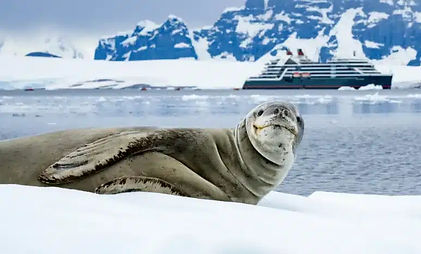
$$$$ Ultra-luxury service, purpose-built polar ships, intimate scale. Virtuoso Preferred.
Seabourn's purpose-built expedition ships, Seabourn Venture and Seabourn Pursuit, bring the brand's legendary service standards to Antarctic waters. At roughly 132 guests, both ships are intimate by luxury standards, all-suite, and fully inclusive. The expedition program is serious: professional naturalist teams, Zodiac landings, and kayaking, without any sacrifice in comfort or service. Ship size: ~132 guests Includes: All meals, premium drinks, gratuities, Zodiac excursions, kayaking Activities: Zodiac landings, kayaking, polar plunge, guided hikes Solo: Reduced supplement on select voyages; most cabins are double-share
PREMIUM

$$$–$$$$ French luxury. And for the deepest polar routes, their signature icebreaker: Le Commandant Charcot. Virtuoso Preferred.
Ponant brings French hospitality to expedition travel: gourmet dining, premium open bar, and a refined onboard culture that sits comfortably between luxury and genuine adventure. The standout is Le Commandant Charcot, Ponant's nuclear-powered polar icebreaker and one of the most extraordinary ships in the world. Charcot is capable of reaching destinations no other passenger vessel can access, including the geographic North Pole and the deepest Antarctic routes. If reaching the truly unreachable matters to you, this is the ship. Ship size: 200–270 guests Includes: Gourmet dining, premium open bar, gratuities, parkas, Zodiac landings Activities: Kayaking, hiking, Zodiac cruises Solo Travelers: Solo supplement applies; occasionally waived on select departures, subject to cabin category and availability.

$$$ The most polar-experienced operator in the world. Signature ship: Ultramarine. Virtuoso Preferred.
Quark is one of the most experienced operators in the polar regions, since 1991, and it shows: in the depth of their guide teams, the range of activities on offer, and the confidence of the operation. Their flagship Ultramarine is helicopter-equipped and purpose-built for the most ambitious Antarctic itineraries, including deep ice routes few other ships attempt. Activity range is Quark's standout strength. Kayaking, camping on the ice, paddleboarding, and helicopter excursions are all available depending on the vessel. For adventurous travelers who want to do more than look at Antarctica from a Zodiac, Quark belongs at the top of the shortlist. Ship size: 120–200 guests Includes: Meals, Zodiac landings, expert guides, parkas, lectures; beer and wine on many ships; gratuities often included Activities: Kayaking, camping, paddleboarding, helicopter flights (Ultramarine only) Solo Travelers: Roommate-matching available; solo supplement applies for private cabin; solo cabins available on Ultramarine only.

$$$ The best photography and science teams in the business. Virtuoso Preferred.
Lindblad Expeditions pioneered expedition cruising and has operated in Antarctica for decades. The National Geographic partnership brings dedicated photo instructors, undersea specialists, and certified naturalists aboard every voyage, the most comprehensive enrichment program in the industry. Ships are intimate at 100–150 guests, itineraries are thoughtfully designed, and the emphasis on education and citizen science makes this a strong choice for curious, engaged travelers who want to come home knowing far more than they arrived with. Ship size: ~100–150 guests Includes: Meals, beer and wine, Zodiac and kayak use, lectures, photography instruction Activities: Kayaking, paddleboarding, snorkeling, citizen science Solo Travelers: Roommate-matching available (double occupancy rate applies whether or not a match is found); occasionally waives supplement on select departures and cabin categories.

$$$ The most inclusive pricing model in expedition travel. Virtuoso Preferred.
Atlas offers one of the cleanest value propositions in the category: everything included, upfront. Meals, unlimited drinks, gratuities, transfers, parkas, and boots are all in the base fare. No surprises at checkout. Ships carry around 200 guests in a luxury-expedition hybrid environment, more comfortable than classic expedition lines without crossing into ultra-luxury territory. A strong option for travelers who want total cost clarity and a polished onboard experience. Ship size: ~200 guests Includes: All meals, unlimited drinks, gratuities, transfers, parkas and boots Activities: Zodiac landings, polar plunge, curated shore excursions Solo Travelers: Solo supplement applies. No share program, no solo cabins.

$$$ Cultural enrichment meets genuine expedition. Refined without being precious. Virtuoso Preferred.
Swan Hellenic occupies an appealing middle ground: elegant ships with a guest lecturer program that genuinely adds depth to the experience. Historians, scientists, and cultural experts complement the naturalist team, making sea days as engaging as the landings. The onboard atmosphere tends to attract intellectually curious travelers who want more than wildlife counts, individuals who leave Antarctica understanding not just what they saw, but why it matters. Ship size: ~150–190 guests Includes: Meals, selected beverages, gratuities, parkas and boots, lectures Activities: Kayaking, hiking, Zodiac cruises Solo Travelers: Roommate-matching available (no supplement if sharing); solo supplement applies for private cabin; occasional promotional perks for solo guests.
STANDARD

$$ Active, adventurous, and the best solo traveler option in the category. "Fly the Drake" options for one or both crossings. Virtuoso Preferred.
Aurora runs serious expeditions with a distinctly active character: kayaking, snorkeling, camping, skiing, and snowshoeing are all part of the program depending on the itinerary. The guides are excellent, the ships are purpose-built, and the culture onboard leans toward people who came to Antarctica to do things, not just see them. Likewise, one of the few operators offering "fly the Drake" options for one or both of the crossings. The solo traveler proposition is the best in the business: dedicated solo cabins at no single supplement. Ship size: ~120–160 guests Includes: Meals, Zodiac landings, lectures, expedition gear Activities: Kayaking, snorkeling, camping, skiing, snowshoeing Solo Travelers: No solo supplement; dedicated solo cabins on every sailing from 2026–27.
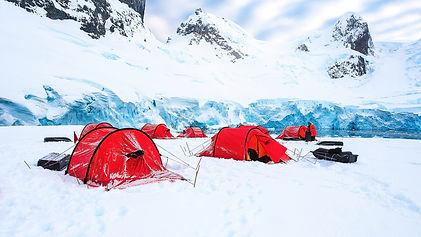
$$ Sustainability-forward, science-driven, hybrid-powered ships. Virtuoso Preferred.
HX operates some of the most environmentally advanced expedition ships afloat: hybrid-electric vessels designed to minimize emissions in some of the most sensitive ecosystems on Earth. The citizen science program is among the most substantive in the industry: guests actively contribute to ongoing research during their voyage. A strong choice for travelers who care about how they travel, not just where. Ship size: ~250–530 guests Includes: Meals, beverages at meals, gratuities, lectures, science programs Activities: Kayaking, snowshoeing, hiking, camping (some at extra cost) Solo Travelers: Solo supplement applies, but low-supplement solo cabins reserved on every departure; occasionally waives supplement on select departures or offers other relevant promos.
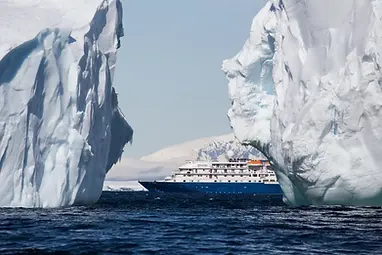
$$ Classic small-ship expedition. Maximum time ashore, no landing rotations.
Poseidon's small vessels carry around 110 guests, small enough that the entire ship goes ashore at once, with no waiting for rotation groups. More time on the ice, more flexibility in the program, and a tight, engaged community onboard. For travelers who want a no-frills expedition experience with maximum landing time, Poseidon consistently delivers. Ship size: ~110–114 guests Includes: Meals, Zodiac landings, expert lectures, parkas and gear Activities: Zodiac cruising, scenic hikes, photography programs; kayaking and camping at extra cost Solo Travelers: Roommate-matching available; solo supplement applies for private cabin; supplement waived if no match is found.

$$ Boutique expedition. Micro to mid-size vessels, strong solo value.
Polar Latitudes operates a small fleet ranging from 70 to around 175 guests, with a high staff-to-guest ratio that translates to a more personal experience. Select voyages include a hotel night and transfers in the base fare. Solo travelers will find one of the more straightforward pricing structures in the category. A Fly & Cruise option launches January 2028, with flexible arrangements to fly into or out of the Antarctic Peninsula aboard the 70-guest Ocean Nova. Ship size: ~70–175 guests Includes: Meals, expedition jacket, hotel night and transfers on select voyages Activities: Camping, kayaking, snowshoeing, photography (some at extra cost) Solo Travelers: Roommate-matching program available; dedicated solo cabins on select ships; solo supplement for private cabin.

$$ New Zealand-based. Wildlife, history, and extended itineraries.
Heritage brings a distinct Southern Hemisphere perspective to Antarctic expedition travel, with a strong emphasis on natural history, cultural context, and extended itineraries that go deeper into the region than many competitors. Expert lecturers are central to the program. A quieter, more specialist option for travelers who prioritize depth of knowledge over onboard amenities. Ship size: ~140 guests Includes: Meals, Zodiac excursions, shore landings, expert guides, lectures Activities: Hiking, Zodiac cruising, kayaking, polar plunge Solo Travelers: Roommate-matching available; solo supplement applies for private twin or suite; dedicated solo cabins available (Superior Single and Main Deck Single).

$$ (Best bang for buck) The value floor for Antarctica. Long landings, pure expedition focus.
Oceanwide runs serious expeditions at the most accessible price point in the category. The emphasis is on time ashore: landings tend to run longer than the industry average, guides are knowledgeable, and the operation is built around the expedition experience rather than onboard amenities. If maximizing time in Antarctica within a defined budget is the goal, Oceanwide is the starting point. Ship size: 90–200 guests Includes: Meals, Zodiac landings, expedition staff Activities: Kayaking, camping, extended landings (some at extra cost) Solo Travelers: Roommate-matching/shared cabin available at no extra cost; solo supplement applies for private cabin; supplement waived if no match is found.
WORTH KNOWING
Antarctica is for those who decide to go. The rest is logistics.
Solo Travelers: Cabin-sharing programs give solo travelers access to multi-occupancy rates without requiring a travel companion, and are the most budget-friendly way to get to Antarctica on your own. Shared cabins may be twin, triple, or quad shares depending on the ship and operator. Oceanwide's quad-share offers the most accessible price point in the category; Quark, Aurora, Swan Hellenic, Poseidon, and Polar Latitudes also offer room-sharing programs on most sailings. For a dedicated solo cabin, Aurora, Heritage, and Quark's Ultramarine have purpose-built options. Shared berths on desirable departures can sell out two seasons in advance. Booking early is the wallet-friendly strategy, not hoping for a "deal."
Accessibility: Antarctic expedition ships host a broad range of ages, and it's nothing new to find passengers in their 70s and 80s onboard. Expedition crews are trained to assist with Zodiac boarding and uneven terrain, and a medical officer is present on every ship. The physical bar is lower than most people assume, and most ships have dedicated handicap-accessible rooms. I encountered a fellow traveler on one of my Antarctic voyages who was wheelchair-bound and unable to board the Zodiacs and officially "land", but completely in his element, spending time on his private balcony or the viewing decks, attending onboard lectures and activities, and having an extraordinary time. I will confirm accessibility options and availability for your departure, before booking.
Cruise-Bys: Larger vessels carrying over 500 passengers are not permitted to land under IAATO regulations. They sail through Antarctic waters without going ashore. Yes, those ships and trips exist. If you're still reading, you already know that's not the trip you want.
The Ross Sea: For those working through an ambitious destination list, the Ross Sea is a different journey entirely. This is not a first-timer's trip (unless, maybe, you're Kiwi). Departing from New Zealand, these extended itineraries pass through the subantarctic islands: Macquarie, Campbell, and the Auckland Islands, each a distinct territory, before reaching McMurdo Sound, Cape Adare, and the Ross Ice Shelf. More days at sea, longer voyages, higher price point, fewer operators: Quark, Aurora, Heritage, Ponant, and Lindblad. Heritage, as a New Zealand-based operator, is particularly well-positioned.
Stop dreaming of Antarctica. The penguins are waiting for you, and so am I. —Angie
Virtuoso-affiliated · Departure Lounge advisor · 60+ countries traveled · 3x Antarctic voyager
Typical response within 1-2 business days · Initial consultation always complimentary